
Seamless vs Welded Stainless Steel Pipes for Industrial Use
Seamless vs Welded Stainless Steel Pipes – Which Is Better for Industrial Projects? Where there is high pressure and structural demand, no material is better than Seamless stainless tubing. Seamless welded tubing is cheaper where there is low pressure and less demanding requirements. The selection of the material is related to production method, wall thickness, stainless grades, industry of use, and others.
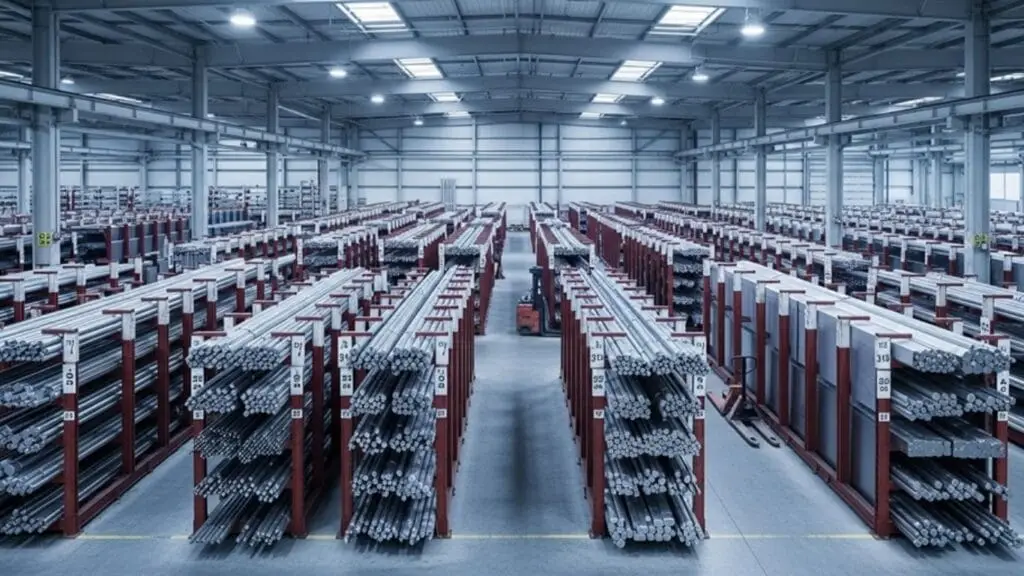
Understanding Stainless Steel Pipes and Tubing
Stainless Steel Pipe and Stainless Steel Tube are used in different industry segments. We see large-scale use across the construction, chemical, power, oil and gas, food processing, and engineering fabrication industries.
Factors for using either a seamless tube or a welded tube are :
The pressure the pipe will be subjected to
- The wall thickness of the pipe
- The length of the pipe
- Corrosion properties of the pipe
- Labour costs involved
- The application of the pipe
- Here is an examination of both types.
What is Seamless Stainless Steel Tubing?
With no welded joints present, this type of tube is produced from a stainless steel billet, which is passed through a die. It has no joints at all, which also means it is equally strong in all directions.
This makes seamless tubing highly reliable for:
- Critical applications
- High-pressure systems
- High-temperature environments
- Power generation plants
- Oil & gas pipelines
Production Process of Seamless Pipes
- Heating a solid round stainless steel billet
- Piercing the centre to create a hollow tube
- Stretching and rolling to the required dimensions
- Finishing to the required wall thickness and length of the pipe
As the manufacturing of seamless tubes does not include welding, its mechanical properties remain homogeneous.
The benefits of seamless tubes:
- Superior structural strength
- Better for structural components under stress
- Ideal for high corrosion resistance use
- Reliable in extreme environments
- Suitable for super duplex steel applications
These super duplex SS pipes find widespread application in the marine and chemical industry as they are quite strong and corrosion-resistant.
Limitations of Seamless Pipes
- Higher labour costs
- More complex production process
- Higher pricing compared to welded pipes
Limited availability in very large diameters
What is Welded Stainless Steel Tubing?
The process, which involves the formation of stainless steel sheets or coils into a tubular shape, which are then welded at the seams, is what we call welded tubing. Once the material is welded together, it is finished by treating the seam, then polished and examined for weakness or leak potential.
With advanced welding practices, welded tubing is a very reliable method for many particular uses.
Welding Process in SS Pipes
The welding process may involve:
- TIG welding
- Laser welding
- Addition of filler (where appropriate)
The seam may also be put through a heat treatment process, which makes it resistant to corrosion and at the same time maintains its strength through the welding.
Benefits of Welded Tube
- Lower labour costs
- More economical production process
- Available in various sizes and larger diameters
- Ideal for thinner walls
- Suitable for less demanding applications
Where Is Welded Stainless Steel Tubing Used?
Welded stainless steel tubing is widely used across a variety of industries due to its strength, low cost, and even wall thickness. Since manufactures made welded tubes from stainless steel coils with the seam welded together by a monitored welding process, the tubing can withstand moderate pressures and thus is used by many industries to fabricate structural components and for fabrication purposes.
- Structural components
- Construction projects
- Fabrication units
- Water pipelines
- General industrial systems
Limitations of Welded Pipes
- Slightly lower pressure tolerance
- The weld seam may be a weak point in extremely critical applications
However, for most industrial needs, high-quality pipes perform exceptionally well.
Seamless vs Welded Stainless Steel Pipes
| Feature | Seamless Pipes | Welded Pipes |
|---|---|---|
| Manufacturing | No weld seam | Longitudinal weld seam |
| Strength | Higher | Moderate |
| Pressure Handling | Excellent for high pressure | Suitable for low to medium pressure |
| Cost | Higher | More economical |
| Size Availability | Limited large sizes | Wide size range |
| Applications | Oil & Gas, Chemical, Boilers | Construction, Fabrication, Plumbing |
This structured comparison helps industrial buyers quickly evaluate options.
Before selecting your pipe type, use our free Stainless steel pipe weight calculator to compare the exact weight of seamless and welded pipes in kg per meter. Moreover, check our full range of stainless steel seamless pipes and stainless steel welded pipes available in stock in Ahmedabad.
Comparison of Wall Thickness and Strength
The performance of stainless steel pipes heavily relies upon the wall thickness of the pipe.
- Thicker walls → Higher pressure capacity
- Thinner walls → Lower cost and easier installation
Thick walls are usually more durable and safe to use with seamlessly manufactured pipes.
Thin walls and low-pressure use prefer welded pipes.
Stainless Steel Grades Available
We offer various stainless steel grades with both seamlessly manufactured tubing and welded tubing, such as:
- SS 304
- SS 316
- Super duplex steel
Super duplex steel pipes offer:
- Exceptional mechanical strength
- High corrosion resistance for use in aggressive environments
- Long service life
Correct stainless steel grades are selected based upon application and environmental exposure.
Industry-Wise Application Comparison
1. Power Generation
Seamless stainless steel pipes are commonly used in power generation plants because:
- They handle high pressure
- They withstand high temperatures
They provide reliable structural components
2. Chemical Processing
In case of use for chemical sectors where a high degree of corrosion resistance is demanded, seamless pipes are preferable (specifically, super duplex steel).
3. Construction & Fabrication
can be found Welded tubing in:
- Structural components
- Railings
- Framework
- General fabrication
These are typically less demanding applications where extreme pressure is not involved.
4. Oil & Gas Industry
Critical applications in oil & gas pipelines prefer seamless stainless steel tubing due to:
- Safety requirements
- Structural integrity
- Pressure endurance
Cost Factors – Why Seamless Is More Expensive
Several factors affect pricing:
- Complex production process
- Higher labour costs
- Material wastage
- Testing and inspection requirements
Welded tubing is more affordable because:
- Simpler manufacturing
- Lower labour costs
- Faster production cycle
For budget-sensitive projects, welded pipes are often the practical solution.
Length of the Pipe and Customisation
Industrial buyers should also consider:
- Standard length of the pipe (usually 6 meters)
- Custom cut lengths
- Diameter and wall thickness specifications
Welded pipes usually have more versatility when it comes to size and customisation.
How to Decide between Seamless Pipe and Welded Pipe
- Before making your purchase decision, consider:
- Pressure requirement
- Corrosion exposure
- Required wall thickness
- Industry regulations
- Budget constraints
- Whether the project involves critical applications or less demanding applications
If the system is safety-sensitive, → Choose seamless tubing.
If cost-efficiency is a priority, → Choose welded tubing.
Final Thoughts
The dilemma of whether to use either seamlessly drawn or welded stainless steel tubing depends on where it will be used, the pressure it needs to withstand, the corrosiveness of the environment in which it will be used, and one’s willingness to pay.
When you are concerned with industries such as power generation, chemicals, and oil & gas, or the field of engineering, then having the right pipe type can mean all the difference between safety, longevity, and efficiency for years to come.
When you know the Stainless steel fabrication process, which grades can be used, what the use of welding makes, and the use of material, then it will be easy to make a purchasing decision intelligently.
Moreover, before placing your order, check our complete stainless steel pipe weight chart for all sizes and schedules to calculate the exact weight of your required pipe.
Furthermore, read our step-by-step guide on how to calculate SS pipe weight using the standard formula with worked examples for round, square, and rectangular pipes.
Frequently Asked Questions
Q1. What is the difference between seamless and welded stainless steel pipe?
Seamless pipes are produced from a single piece of metal without any welded joints. They have greater strength, a homogenous structure, and can tolerate higher pressures. Welded pipes are formed by bending a stainless steel plate and welding the seam. They are more economical and used for general-purpose applications.
Q-2. In which situation would seamless stainless steel pipes be the better choice over welded ones?
Choose seamless pipes when high pressure and high temperature conditions are present, for critical applications in oil and gas, chemical plants, and power generation, and when safety and structural integrity are the primary requirements.
Q3. What is better, welded or seamless SS pipe?
Seamless pipes are generally stronger because they do not have a welded seam which can be a potential weak point at high pressures. Seamless pipes have a homogenous wall structure making them more reliable for critical and high-pressure applications.
Q4. Which is stronger, seamless or welded pipe?
Generally speaking, seamless pipes are the stronger type, which do not have a welded seam. It could even be argued a vulnerability at high pressures.
Q5. Which is cheaper, seamless or welded pipe?
Welded stainless steel pipes are cheaper due to a simpler manufacturing process, lower labour costs, and a faster production cycle. Seamless pipes cost more due to complex production, higher material wastage, and additional testing requirements.
Q6. Should I use stainless steel welding or seamless tubing?
Altra Enterprise supplies both seamless and welded stainless steel pipes in SS 304, SS 316, SS 316L, and Duplex 2205 grades. Super duplex steel pipes are also available for highly corrosive marine and chemical environments.
Q7. What are the distinctions between the sizes of steel and aluminium tubing?
Altra Enterprise at Kathwada GIDC, Ahmedabad, supplies both seamless and welded stainless steel pipes in SS 304, SS 316, and Duplex grades. Call +91-7600305469 for an instant quote and bulk pricing with fast delivery across India.
Q8. What is the discrepancy between the pressure ratings of welded and seamless stainless steel pipes?
Seamless pipes can bear higher pressure ratings than welded pipes because they do not have a weld seam. The homogenous wall structure of seamless pipes provides consistent pressure tolerance throughout the pipe length. Modern welded pipes can handle moderate pressures but are not recommended for extreme pressure applications.
Need SS Seamless or Welded Pipes?
SS 304, 316, Duplex 2205 | All Sizes | Pan India Delivery
📍 Kathwada GIDC, Ahmedabad, Gujarat | 📧 info@altraenterprise.in

